
Make Dulles great again
The Trump administration wants to leave its mark on Washington's Dulles airport

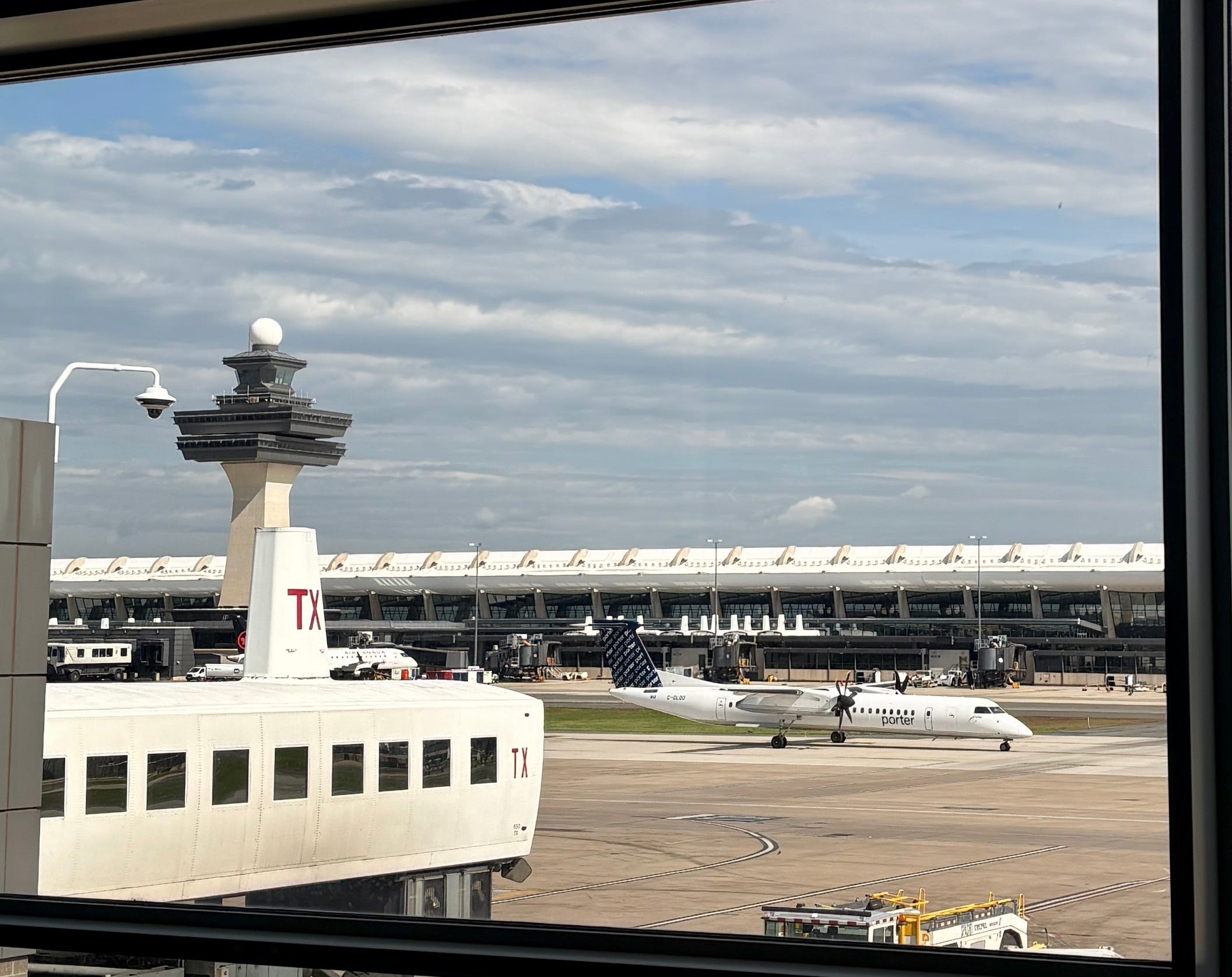
It was clear the moment Trump nominee Trent Morse called Washington Dulles International Airport “stuck in the past” that the administration would meddle in the airport’s future.
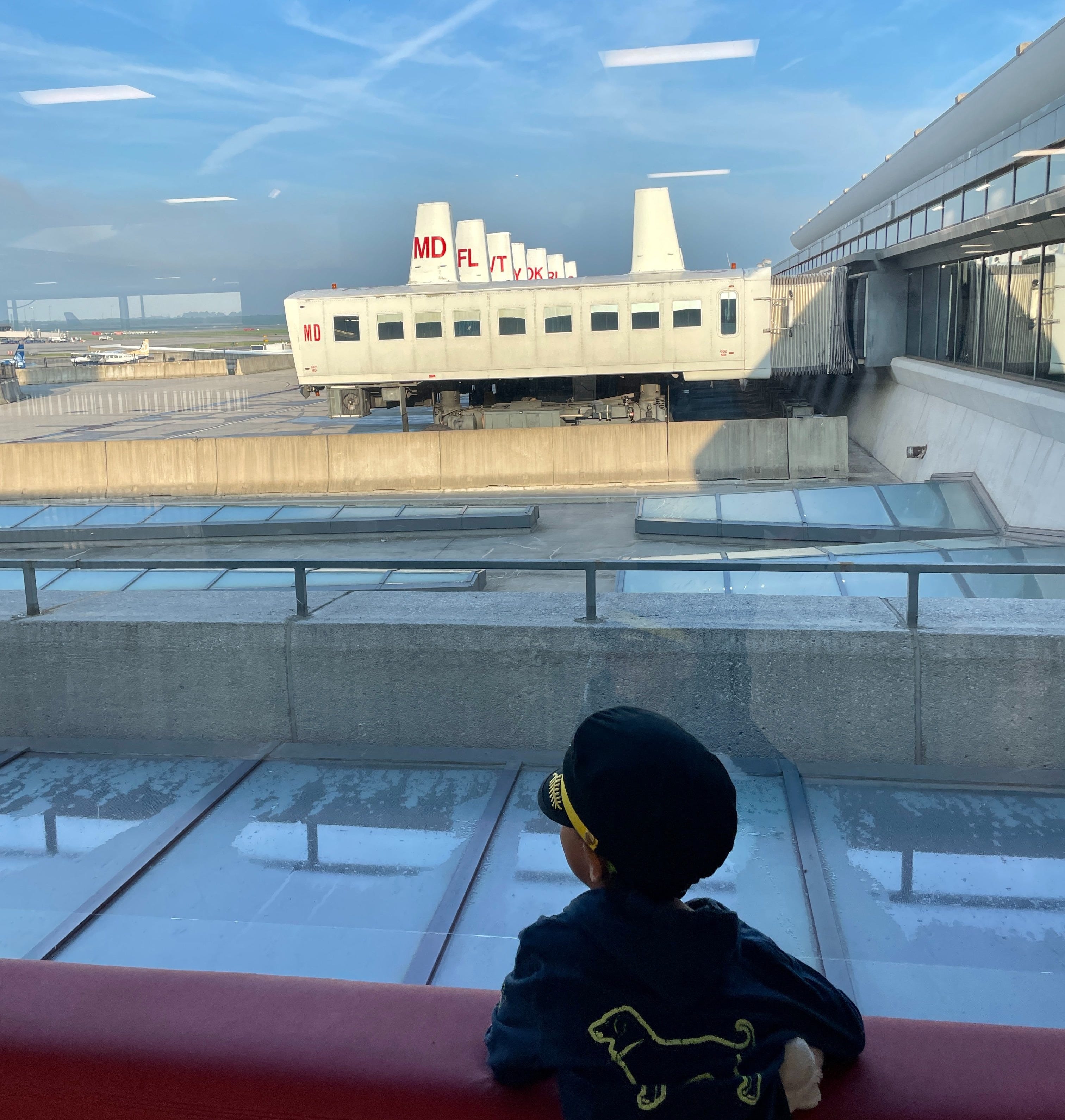
The issue: the airport’s mobile lounges and plane mates, or “moon rovers” as Morse described them, that continue to shuttle travelers to and from Concourse D, and to the International Arrivals Building. While an integral part of Eero Saarinen’s original design for the airport, they are dated relics of the bygone jet age popular primarily with kids and AvGeeks (I am unapologetically in the latter camp).
Fast forward to Tuesday and President Trump weighed in on the airport during a Cabinet meeting: “It’s got a beautiful terminal … one of the greatest architects in the world at the time. And so they have a great building and a bad airport, but we’re gonna turn that around.”
“We’re gonna make it into as good as there is in the country,” Trump added.
Or, to paraphrase the president’s campaign slogan, make Dulles great again.
Replacing Saarinen’s iconic terminal is an option
“The Department is interested in design concepts and construction and financing proposals for the development of completely new terminals and concourses to replace or build upon the existing main terminal and satellite concourses at Washington Dulles International Airport,” the Department of Transportation (DOT) wrote in a solicitation for proposals to revitalize Dulles released late Tuesday.
That the Trump administration would even consider replacing Saarinen’s main terminal is shocking, even for an administration known for its shock and awe tactics. Opened in 1962, it is considered by many, including the American Institute of Architects, to be among the greatest buildings of the 20th century.
There’s even a LEGO model.
“It’s all about the space under the big roof, all about the celebration of leaving Washington, D.C., about this journey to the sky,” HOK Design Principal Peter Ruggiero said of Saarinen’s design at a talk in 2020.
Ruggiero worked on the expansion of the main terminal in line with Saarinen’s design at Skidmore, Owings & Merrill in the 1990s and, more recently, Terminal B at New York’s LaGuardia Airport.
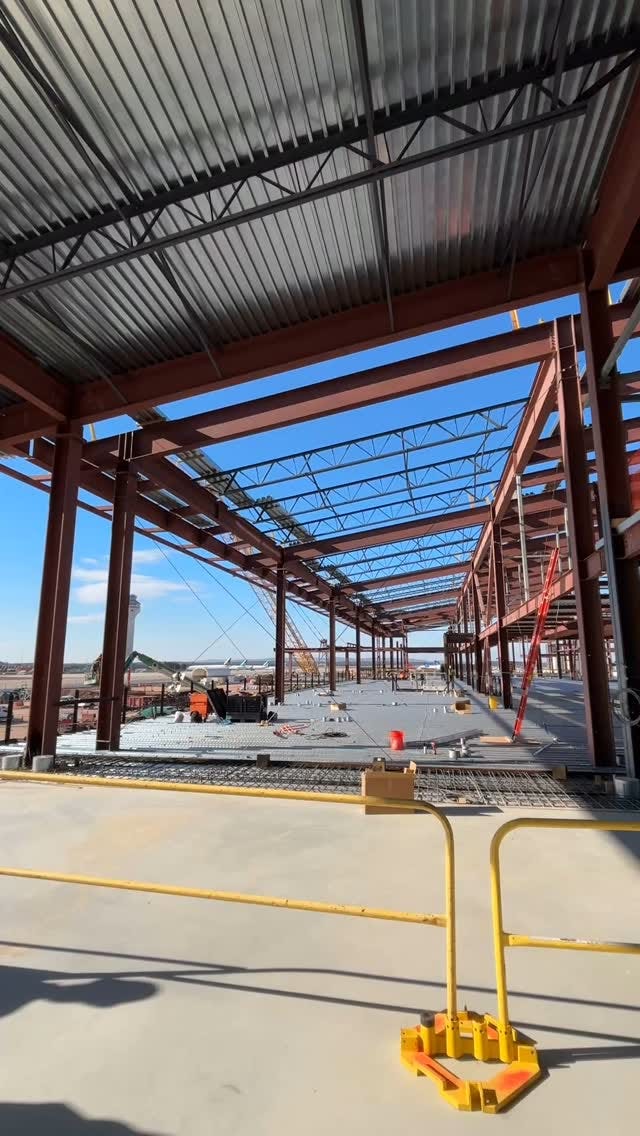
The Metropolitan Washington Airports Authority (MWAA) in March awarded HOK the design contract for the second phase of Dulles’ new Concourse E that will eventually replace part of “temporary” Concourse C-D. PGAL designed the first, eastern phase that is due to open in the fall of 2026.
Neil Flanagan, a DC-based architect and the author of the forthcoming history, The Birth of a Capital, was skeptical after reading the solicitation.
“I suppose you could tear down the existing main terminal if you liked lighting money on fire. What’s the point?” he said. “Dulles is not landmarked in Virginia, but someone will certainly try to landmark it now.”
The terminal became eligible for the National Register of Historic Places in 1978, according to modern architecture preservation organization Docomomo.
“What any of this has to do with the original main terminal is beyond me unless it’s just score settling by traditionalists in the Trump administration,” added Flanagan. “I think they want to tear it down precisely because it’s a modernist building that is popular, inspiring, and beautiful.”
A modern neo-classical airport?
In August, Trump signed an executive order titled: Making Federal Architecture Beautiful Again.
That order, Bloomberg CityLab’s Kriston Capps wrote, established “classical architecture as the preferred style for US civic buildings” and upended decades of precedent where design flowed from the architectural profession to the government, not the other way around.
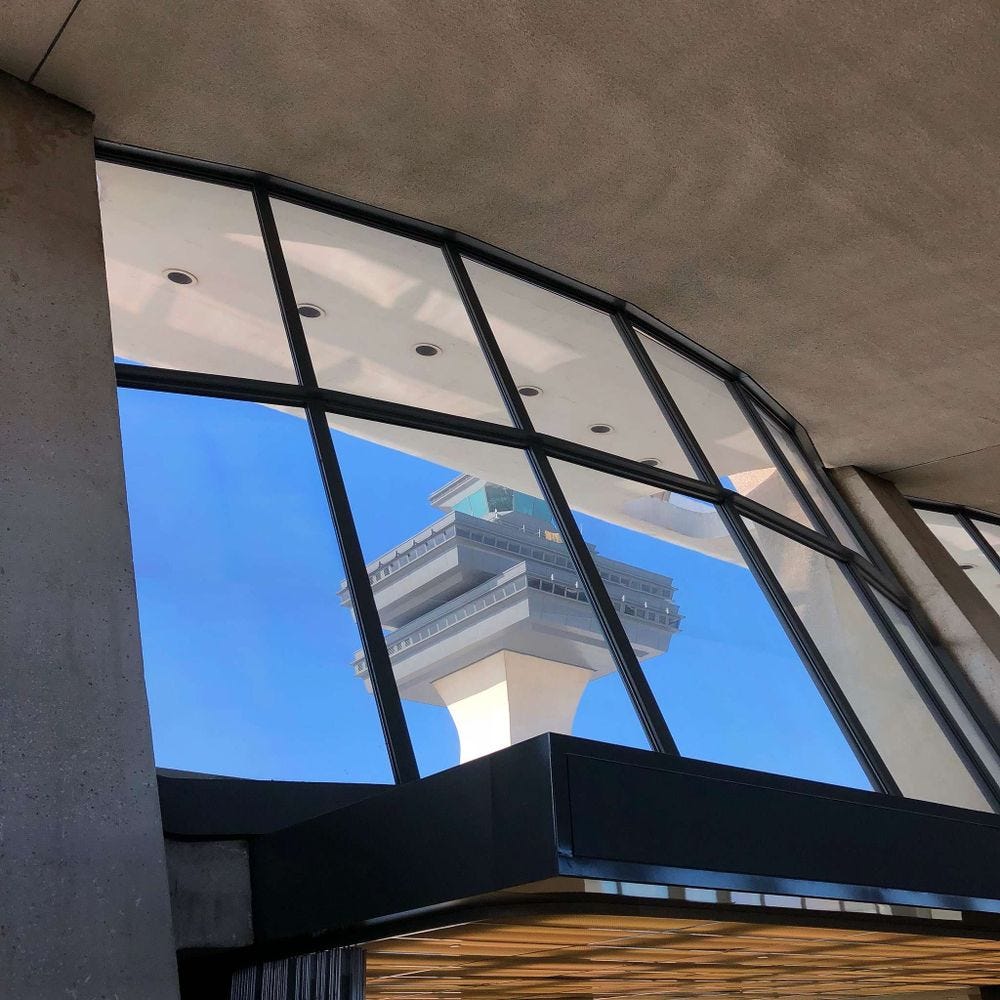
An example of architects leading government is I.M. Pei’s standard air traffic control tower design for the Federal Aviation Administration. The towers are textbook modernism with a unadorned, “graceful, flaring shape,” as Architectural Forum put it in 1963.
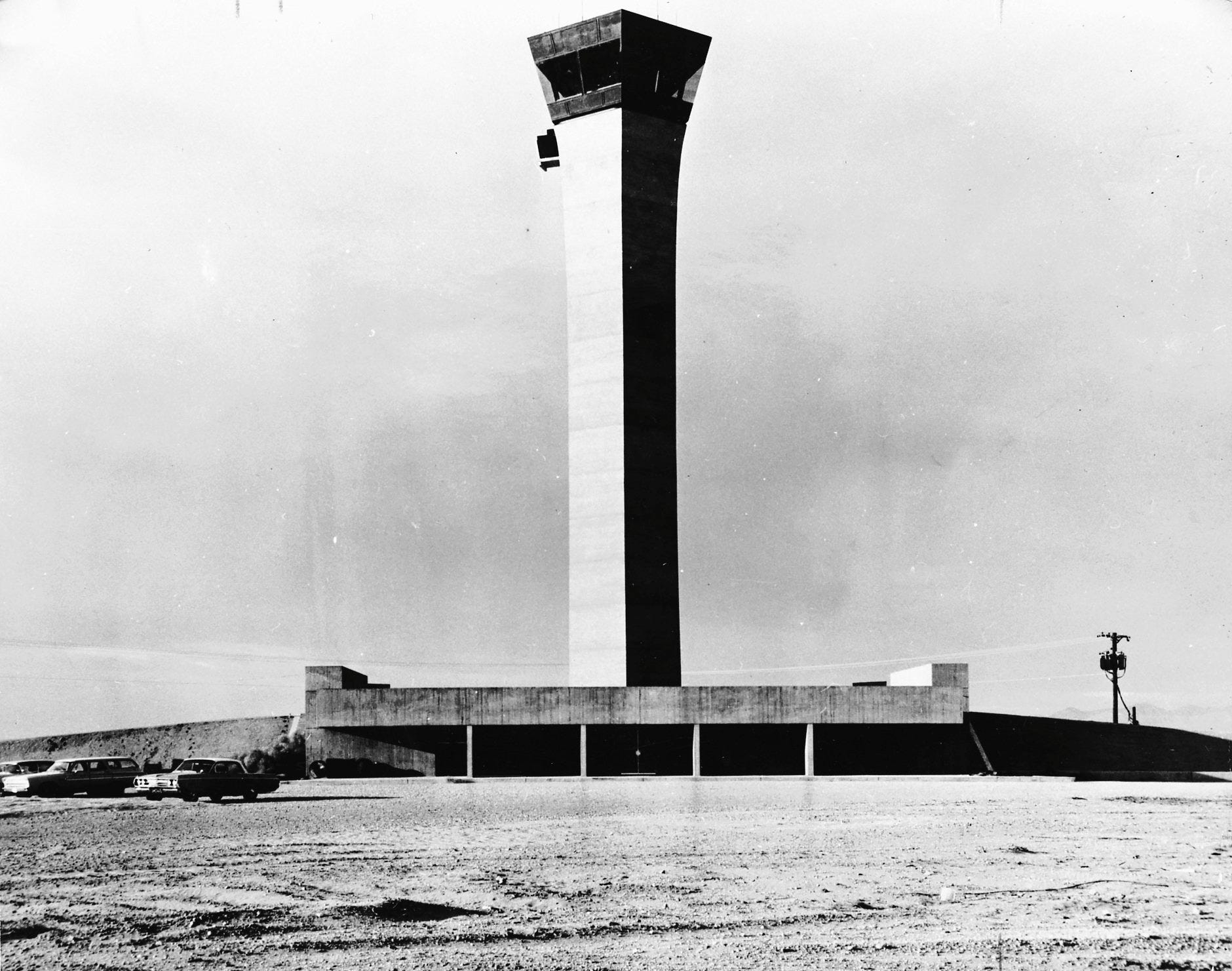
This is where the DOT’s Dulles solicitation gets confusing. It asks proposals be “consistent with” Trump’s executive order, suggesting that neo-classical or traditional — defined as “Gothic, Romanesque, Second Empire, Pueblo Revival, Spanish Colonial, and other Mediterranean styles” — designs are preferred for Dulles.
The airports that adopt these styles tend to be ones where said style is part of the local architectural vernacular. For example, William E. Burk, Jr.’s Pueblo-style terminal at the Albuquerque International Sunport (opened 1965) or HNTB and 19six Architects Spanish Colonial terminal at the Santa Barbara Airport (opened 2011).
In other words, they are not styles one would deem appropriate for an international airport of Dulles’ stature.
The solicitation goes on to say: “Ideas should be bold, creative, and uncompromising. Americans deserve a big, beautiful new airport for the Nation’s capital.”
This is a long way to say there appears little clarity, yet, on the administration’s vision for Dulles. Or “cartoonishly vague” as Flanagan put it. One thing, however, is certain: it will not include mobile lounges.

So much for process
The real zinger of all this is MWAA already has a plan for Dulles. Its board approved a new master plan in July1 that would phase out the mobile lounges, replace Concourse C-D and make other improvements — an above ground connector between Concourse A-B and the terminal anyone? — over the next 25 years.
The most logical, and probably cost-effective, way to modernize Dulles would be to fast-track that plan.
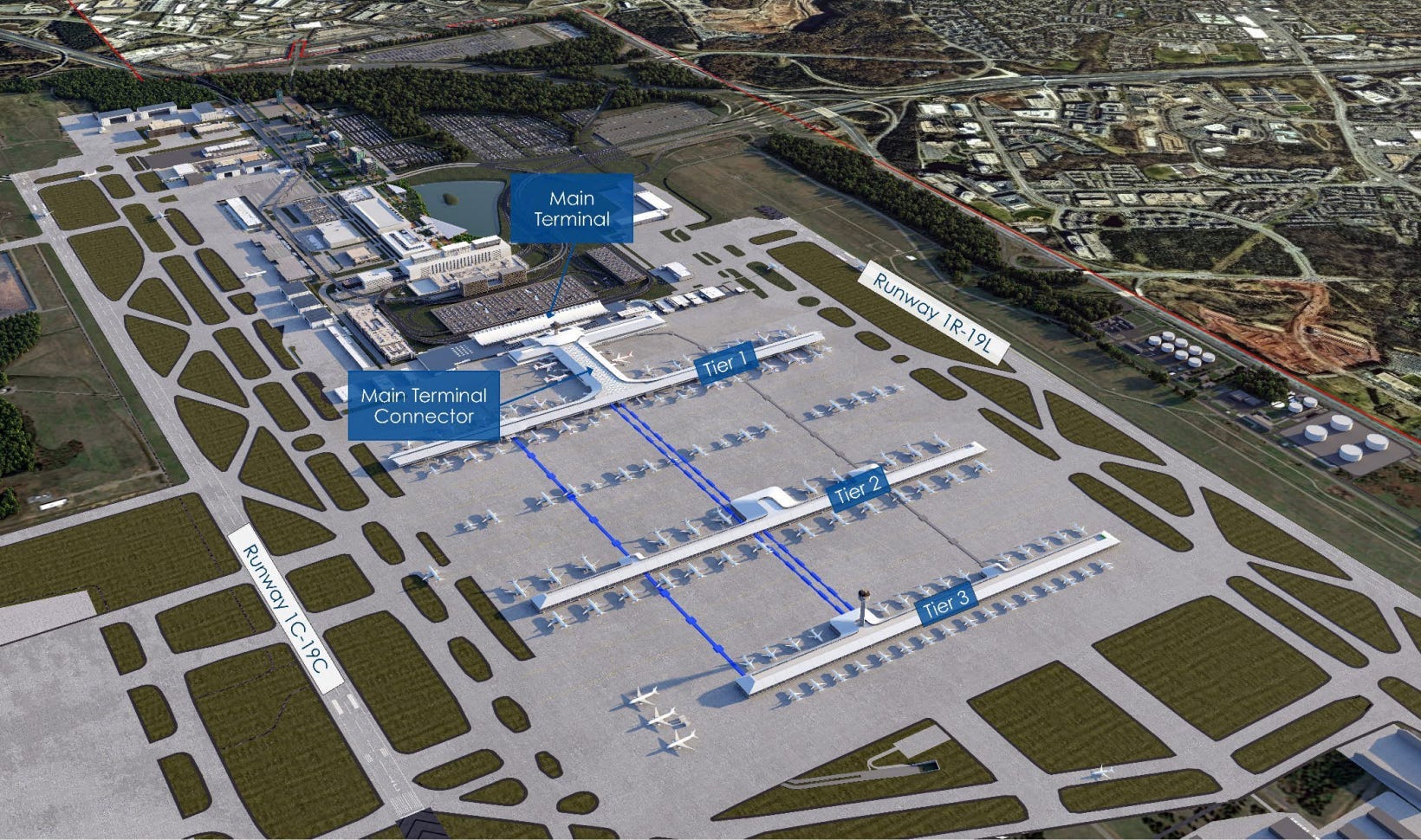
United Airlines, with a large hub at Dulles, is already prepping for the first phase of that plan: the 14-gate eastern end of Concourse E. An airline spokesperson called Dulles a “national asset” and said the airline looked forward to working with the administration to continue improving the airport.
Critically, they said any improvement needs to be done in a “cost-effective way.” It was just over a decade ago that former United CEO Jeff Smisek threatened to close the airline’s hub at Dulles over costs, which peaked at a $26.47 per passenger in 2013 or more than double the rates at nearby Baltimore-Washington International and Washington Reagan National airports. The estimated cost per passenger at Dulles this year is $11.17.
The DOT, instead of looking for ways to speed up MWAA’s master plan, specifically requests proposals “developed independently from the current capital improvement plans,” including said master plan.
What a boot up MWAA’s arse.
“The Airports Authority appreciates the administration’s interest in making improvements to Washington Dulles International Airport,” a spokesperson for MWAA said in a statement. “We look forward to seeing the results of the U.S. Department of Transportation’s request for information and working collaboratively with the administration.”
What MWAA can do at this stage is limited. The federal government owns Dulles, and the popular close-to-downtown Washington National airport, and leases it to the operator under an agreement that ends in 2100.
The DOT does state that it “intends” to forward all submissions to MWAA for “consideration and potential sponsorship.” What that entails, and how much pressure the administration may apply for its preferred proposal, is unclear.
Whatever comes of the DOT’s Dulles solicitation would need approval from the MWAA board, National Capital Planning Commission and other bodies before it could come to fruition.
All this over 49 mobile lounges and plane mates.
“Dulles is sooooo close to being a GREAT airport,” friend and fellow Substacker
told me the other day. All that needs to change are the mobile lounges and United concourse (Concourse C-D), and Metro needs to add an express train to the District.Here here.
The story was updated with statements from MWAA and United Airlines, as well as more details on the capital project approvals process for Dulles.

The Dulles master plan is awaiting FAA approval.