
BWI's Glam Up
Baltimore-Washington sheds a bit of its functional roots with the new A-B Connector

A version of this story first appeared in The Points Guy.
Baltimore-Washington Thurgood Marshall International Airport (BWI) is about to get a bit snazzier, at least for Southwest Airlines fliers.
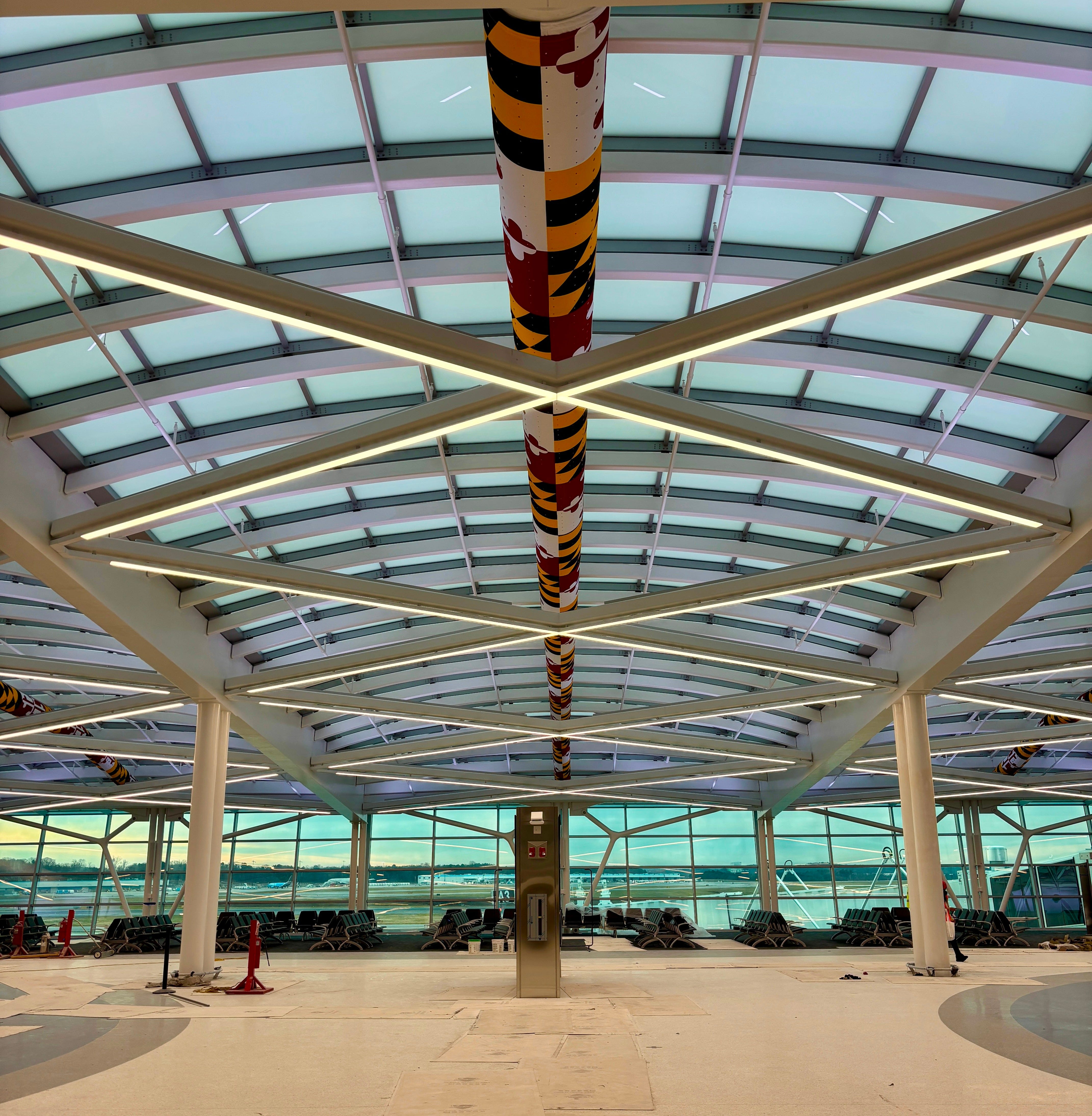
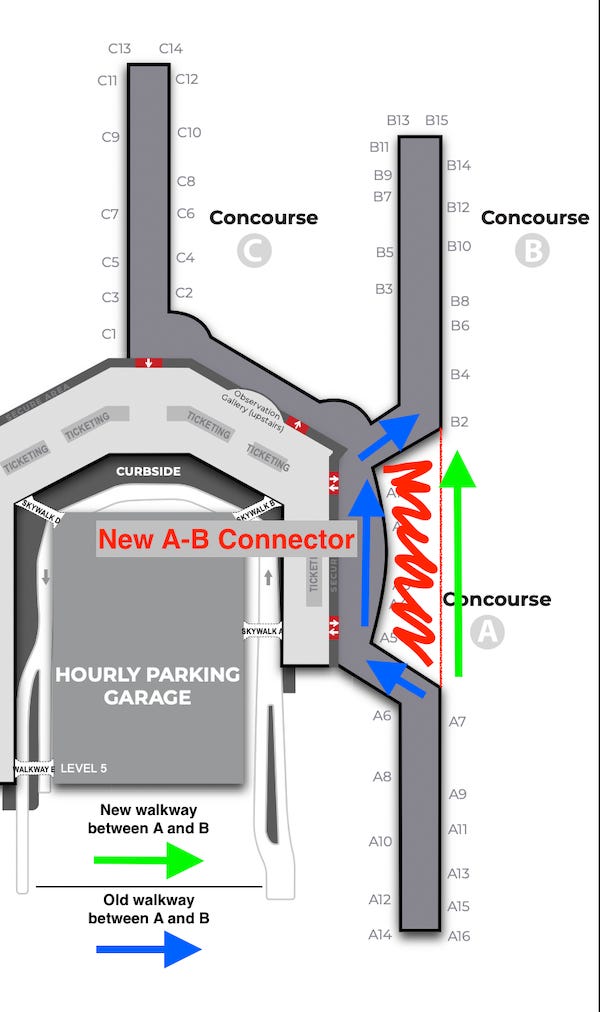
The airport will open the Jacobs-designed $500 million Concourse A-B Connector project on Jan. 9, 2026. The centerpiece of the new 142,000-square-foot space is a glass-ceilinged atrium that extends over a hundred feet from the existing food court between concourses A and B over a clear-span area to floor-to-ceiling windows overlooking the aircraft ramp and runways beyond.
Shannetta Griffin, executive director of BWI operator the Maryland Aviation Administration, described it on a recent hard-hat tour, as “very different from anything else they’ll see in the airport.”
Right she was.
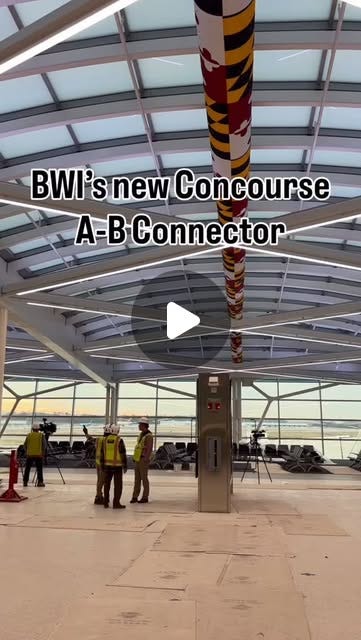
BWI, the Washington, D.C., region’s second busiest airport and Southwest’s third largest base, is better known for its low costs (averaging $10.57 per passenger for airlines in 20241) and functionality rather than stunning architecture. It is an easy airport to get in and out of with none of the bells and whistles of Washington Dulles or Washington Reagan National airports.
And that is OK. BWI serves a vital role in the D.C. region’s three-airport system: it is the area’s main low-fare airport. In 2023, the second most common reason travelers choose BWI after proximity (their top reason for choosing any of the region’s airports) was “less expensive airfare,” according to the Metropolitan Washington Council of Government’s latest Washington-Baltimore Regional Air Passenger Survey.
One does not build a palace to air travel when low fares are a priority.
That brings me back to the A-B Connector. When I first read about the project years ago, it confused me. Why spend several-hundred-million-dollars (at the time) on a new atrium that nets no additional gates when an airside connector already exists, albeit through a food court?
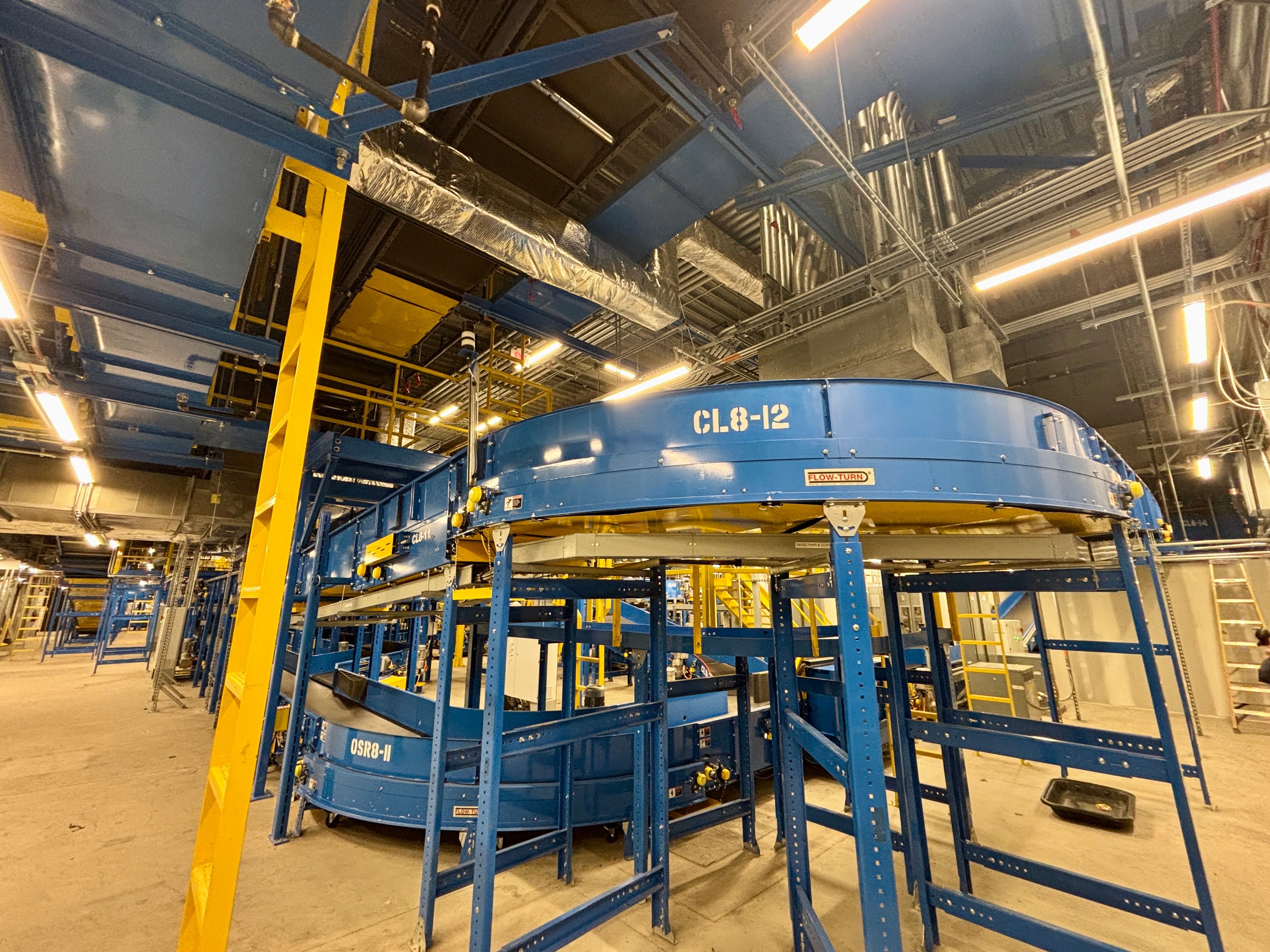
The answer is bags. By extending the terminal building to the outer line of concourses A and B, BWI created space for an entirely new basement luggage processing system that it — and Southwest — deemed necessary to the airport (and hub’s) continued growth.2 The new system can process 3,200 bags an hour and scalable to 5,400 bags from the current cap of 2,100 bags.
If only bags still flew free on Southwest.
The space above the new baggage system is the airport’s new atrium and the A-B connector travelers will enjoy come January.

On the whole, I like what the airport has done. As Griffin said, there is no other space at BWI as open to the outside as the new A-B atrium, as I am calling it. The lattice structural elements in the ceiling echos Peterson and Brickbauer’s 1979 space-framed main terminal that was part of a broader renaissance for the city that saw the Inner Harbor become a destination and the opening of the Peter Chermayeff-designed National Aquarium in 1981.
And oh there is light. Lots of light.
On the flip side, the atrium feels generic as opposed to, say, Foster + Partner’s Kogod Courtyard with its glazed, undulating glass roof at the Smithsonian’s National Portrait Gallery in D.C. The A-B atrium could be any hospital renovation or university student center extension — institutional with airplanes beyond the glass.
And, as open as the new atrium is, the walls on either side end at 90-degree corners when one meets the connector passageway, the corridor where travelers will walk between concourses A and B. These corners could have been rounded to create a more natural flow, and open feeling, between the atrium and passageway.
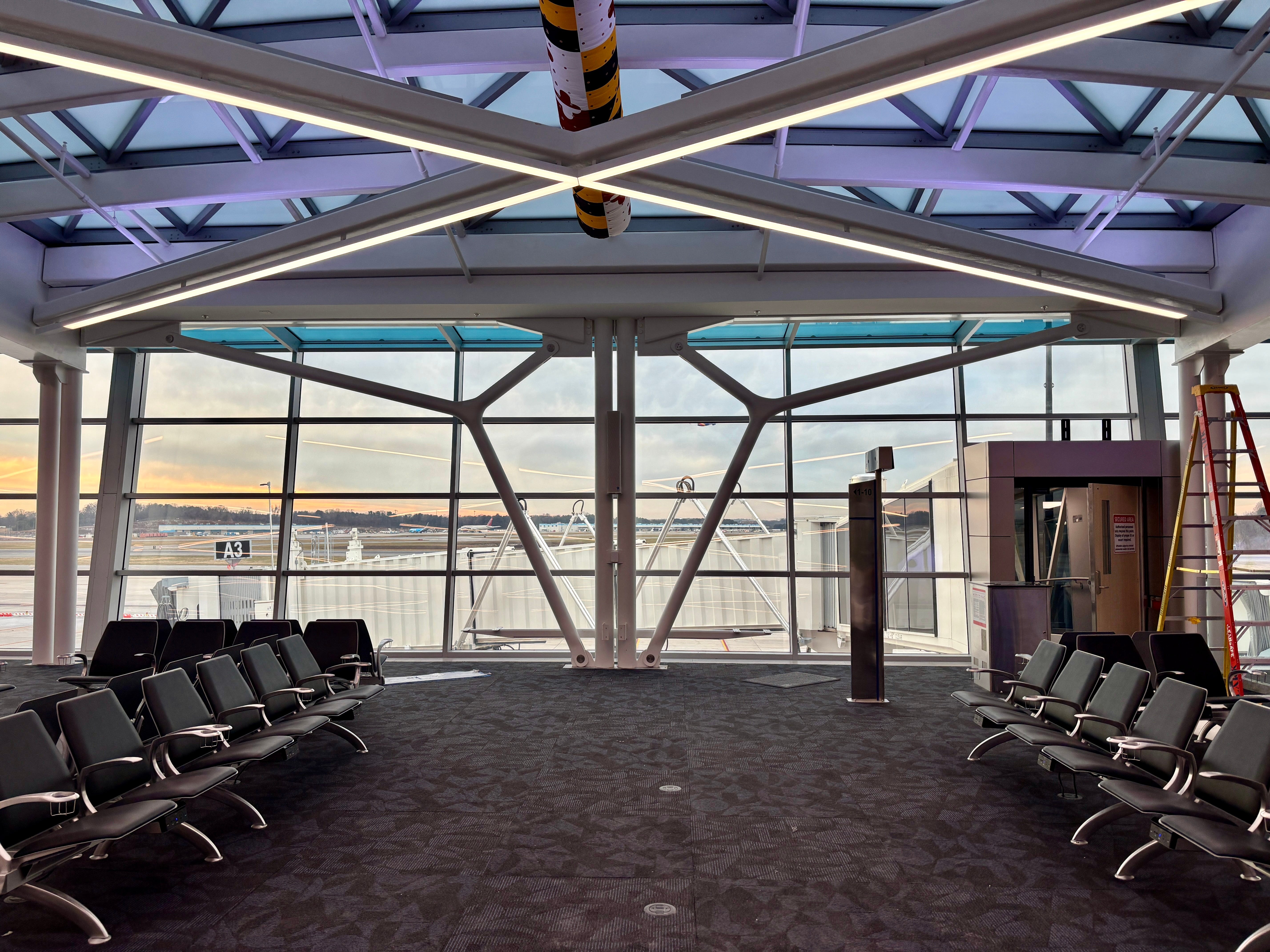
Now, I grant you, the space is not finished. BWI spokesperson Jonathan Dean said work will continue after it opens to travelers in January on the filling out the concession space. Local institutions, like, Baltimore’s famous Lexington Market will eventually have outposts. That will be great — I would always rather a cup of Zeke’s Coffee and a bowl from Ekiben3 than the same from Starbucks and Panda Express.
Speaking of place, BWI goes above and beyond to ensure travelers know they are in Maryland. Three HVAC ducts spanning the entire atrium are wrapped in the state flag. One architect friend saw them and went, “oh my.”
Marylanders go hard for their flag. With elements of the state’s colonial and Civil War history, the complex red-and-white check and black-and-gold stripe pattern is among the most distinct, and considered by some to be one of the best, state flags in the U.S. and Canada.
While I applaud the pride of place, I think the wraps are a cheap replacement for what could be space for a signature piece of art. Airports around the world are increasingly using art as defining aspects of their design, from the lamp-bear at Doha Hamad International Airport to the “Instagrammable” pieces coming to the new Terminal 1 at New York’s John F. Kennedy International Airport and the whimsical but functional sculptures at Indianapolis International Airport. BWI missed an opportunity to expand its art collection — and give Marylanders something else to be proud of — in the new A-B Connector.


On the whole, the A-B Connector is the latest in a trend I like at BWI. The D-E Connector by AECOM (opened 2016), Concourse A extension by WSP (opened 2021) and award-winning loos (opened since 2021) are all positive passenger improvements to the airport. They are more light-filled, pleasant and intuitive spaces than the airport’s 1980s and early 2000s elements.
And, impressively, all of these expansions were completed at low cost (though one could also say that shows), keeping with BWI’s low-fare ethos.
There is, of course, room for improvement. The A-B Connector could be great rather than good airport architecture but that is simply not the BWI we have.
BWI remains a functional cousin to National’s Jeffersonian Domes and Dulles’s soaring jet age swoop. The A-B Connector might not be magical but it is a pleasant space that will benefit travelers — something that in the world airports is no small feat.


Airline CEOs love to blame aged bag processing systems, whether truthfully or not, for tying their hands when it comes to growing a hub.
These are just Baltimore outlets I love and not any confirmation that they plan locations at BWI.